Gynaecological cancers
Gynaecological cancers (pronounced gie-nee-co-lo-ji-kal, and often shortened to ‘gynae’ – or ‘gie-nee’) affect the female reproductive organs, including:
- cervix
- womb/uterus
- ovaries
- vulva
- vagina


Gynaecological cancers (pronounced gie-nee-co-lo-ji-kal, and often shortened to ‘gynae’ – or ‘gie-nee’) affect the female reproductive organs, including:

Fifty-seven women are diagnosed every day with a gynaecological cancer and 21 women die each day from one of these conditions [LadyGarden].
Gynaecological cancers can affect any woman or person with these intimate body parts.
Your risk of developing any of the gynaecological cancers depends on many factors, including age, genetics, and exposure to risk – sometimes created by lifestyle. However, the positive news is that many gynaecological cancers are preventable, and treatable if diagnosed early.
And early diagnosis depends on more people seeking advice from their GP surgery if they have symptoms that include:

For details of the signs, symptoms, and risks of cervical cancer and for information on cervical screening, visit the cervical cancer awareness page of this website.
If you receive an invitation for your cervical screening (also known as a smear test), don’t ignore the invite. Make and keep the appointment – it could save your life.
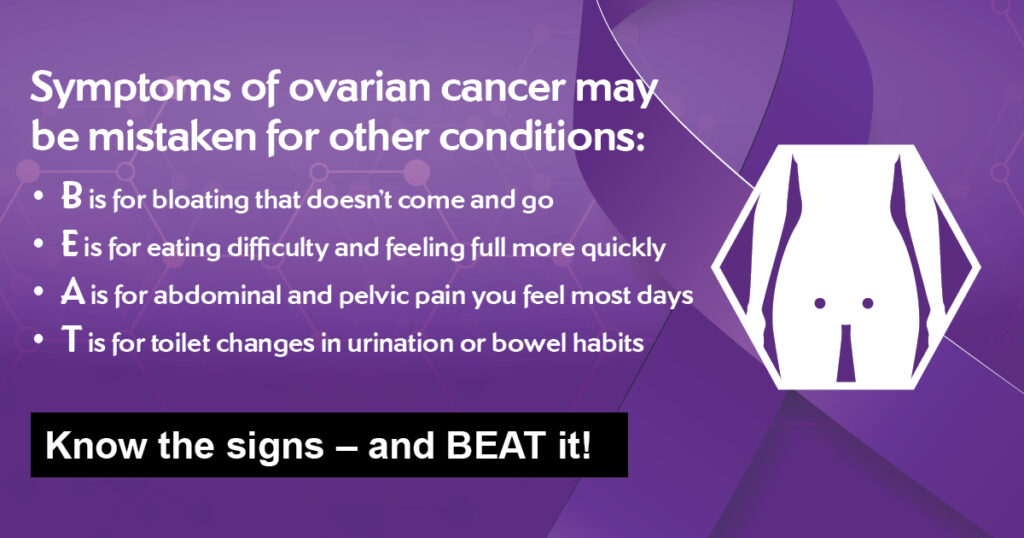
There are around 7,500 new ovarian cancer cases in the UK every year. That’s 21 every day [CRUK] and 1 in 50 UK females will be diagnosed with ovarian cancer in their lifetime [CRUK].
Symptoms of ovarian cancer may be mistaken for other conditions, but these are the main signs you should watch for:
It is likely that these symptoms will be because of something less serious, but if they are persistent or you are worried, you should contact your GP surgery.
The main risk factors of ovarian cancer are:

Womb cancer is also known as uterine cancer, or endometrial cancer. The endometrium is the lining of the womb/uterus.
Since the early 1990s in the UK, the number of times womb cancer has been diagnosed has increased by 59% [CRUK]. Around 9,700 new cases of womb cancer are diagnosed each year – that’s 27 a day [CRUK]. And from these, there are 2,500 deaths each year [CRUK].
Anyone with a womb can get womb cancer, though it is most common after menopause. You have a greater risk of getting womb cancer if you have:
A high level of the oestrogen hormone can increase your chance of getting womb cancer. You may have a high level of oestrogen if you:

The UK diagnoses around 1,400 new cases of vulval cancer each year [CRUK]. But this is set to rise to about 2,000 each year by 2040 [CRUK]. The main symptoms of vulval cancer can include:
Despite the forecast rise in number, 69% of cases of vulval cancer are preventable [CRUK]. HPV (Human Papillomavirus) is the main risk which increases the chance of getting vulval cancer.
HPV is thought to be responsible for 4 of every 10 vulval cancers. The HPV vaccination has been available to school children aged 11 to 13 since 2008. It protects against cervical cancer and vulval cancer, and some other, but not all, cancers.
If you are an adult who has not had the vaccination, you may be at risk. The HPV vaccination helps prevent cancer by protecting against HPV. In England, girls and boys aged 12 to 13 years are routinely offered the first HPV vaccination when they’re in school Year 8. The second dose is offered six to 24 months after the first dose.
It’s important to have both doses of the vaccine to be properly protected. If you’re eligible and missed the HPV vaccine offered in Year 8, it’s available for free on the NHS up until your twenty-fifth birthday for:
Other conditions and lifestyle choices can also increase your risk of vulval cancer:
The 8,000+ deaths a year from gynae cancers have a terrible impact on the families involved. We want to reduce that number. You know your own body and what is usual for you. If you experience any of these symptoms for more than three weeks, contact your GP surgery. Don’t let embarrassment stop you. Usually it’s not cancer, and you can be reassured, and any other treatment that’s needed can be given instead.
Screening and early diagnosis saves lives.
FP: 23/10/2023
NU: 1/09/2024