

What are mouth and throat cancers?
Mouth and throat cancers are caused by cells in the mouth and throat growing and dividing in an uncontrolled way. The mutations cause cells to grow uncontrollably and continue living after healthy cells would normally die. These cells can form a tumour in your mouth or throat.
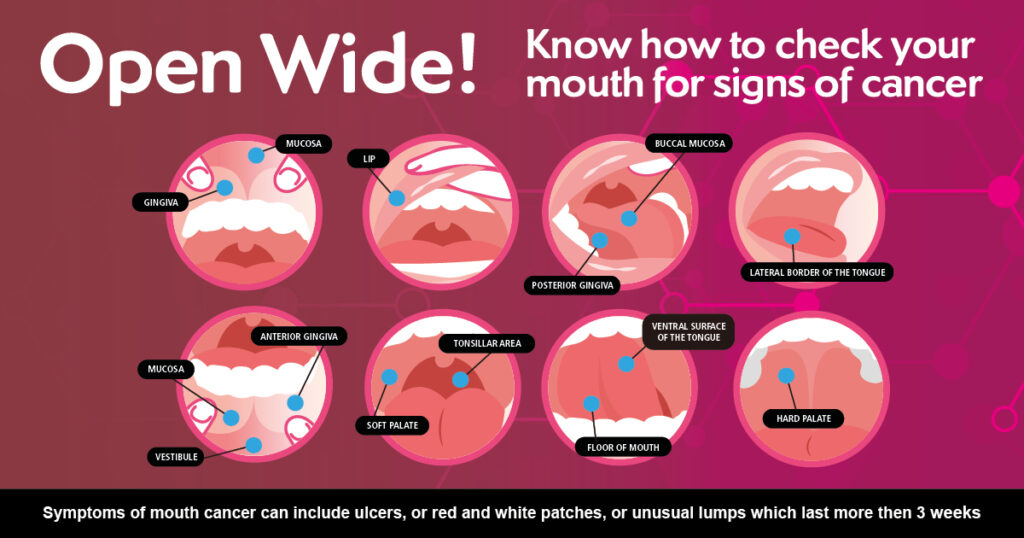
Mouth cancer can start in any part of the mouth, also known as the ‘oral cavity’, which includes:
- lips
- lining of the cheeks
- front ⅔ of the tongue. Most mouth cancers occur in the tongue. These make up around one in three cases for men and women.
- gums
- floor of the mouth
- roof of the mouth
- area behind the wisdom teeth
- salivary glands
Most mouth cancers are squamous cell carcinomas, although unusual mouth cancers include:
- adenocarcinoma (in the salivary glands)
- sarcoma (in bone, cartilage, muscle, or other tissue)
- malignant melanoma (in cells that produce skin colour)
- lymphoma, (which starts in the lymph glands)
Cancer can develop anywhere in the throat (also known as the pharynx), including:
- in the back ⅓ of the tongue
- the soft area at the back of the roof of the mouth
- tonsils and two ridges of tissue in front of and behind the tonsils
- back wall of the throat
Who can get mouth and throat cancers?
Doctors diagnose round 12,400 [CRUK] new mouth and throat cancers in the UK each year – that’s 34 people a day:
- 8,600 new cases in men
- 3,900 new cases in women
The risk of mouth cancer increases with age with more than three quarters (78%) of new cases diagnosed in people who are aged 55+ [OHF].
Incidence rates for head and neck cancer are lower in the Asian and Black ethnic groups, and in people of mixed or multiple ethnicity, compared with the White ethnic group, in England. However, incidence rates are higher, compared with the White ethnic group in females, in the Asian ethnic group (2013-2017) [CRUK].
But 46-88% of mouth and throat cancers in the UK are preventable.
What are the signs and symptoms of mouth and throat cancers?
Mouth cancer
If you have any of these three key signs and symptoms of mouth cancers for three weeks, see your dentist or GP surgery:
- ulcers which don’t heal after three weeks
- red and white patches in the mouth
- unusual lumps or swellings in the mouth
Regular dental check-ups include checks for signs of mouth cancer as well as tooth decay. In the UK, 1 in 55 men and 1 in 108 women will be diagnosed with oral cancer in their lifetime [CRUK].

Throat cancer
Visit your GP surgery if you have any of these four key symptoms of throat cancer for more than three weeks:
- a croaky voice
- an unexplained lump in your neck
- pain when swallowing
- a feeling of a lump in your throat
Other signs of throat cancer include a cough, ear pain, weight loss, or a sore throat.
Many of these are also signs and symptoms of other conditions much less serious than cancer. But we all know our own bodies’ best so if you have any suspicion that something may be wrong contact your doctor immediately.
Early diagnosis saves lives.

How do you reduce your risk of mouth and throat cancers?
Although you cannot change your age, which is the greatest risk of mouth and throat cancer, making simple lifestyle changes can reduce your chance of developing these cancers:
- quit smoking or chewing tobacco, or chewing betel nut – tobacco is the single biggest cause of both mouth and throat cancers, causing up to 64% of diagnosed laryngeal (part of the throat) cancers
- avoid drinking large quantities of alcohol – drinking alcohol to excess can increase the risk of developing mouth cancer by 400%. And drinking and smoking together can make mouth cancer 30 times more likely [MCF]
- a diet high in fruit and vegetables may protect against head and neck cancer – insufficient fruit and vegetables intake is linked to an estimated 56% of mouth cancer cases, and an estimated 45% of laryngeal cancer cases in the UK [CRUK]
Human Papilloma Virus (HPV)
HPV is transmitted through oral sex and causes genital warts. HPV can cause mouth cancer in younger people, who do not smoke. It could overtake tobacco and alcohol as the main risk factor for mouth cancer within the next decade [MCF]
In England, girls and boys aged 12 to 13 years are routinely offered the first HPV vaccination when they’re in school Year 8. The second dose is offered six to 24 months after the first dose.
It’s important to have both doses of the vaccine to be properly protected.
If you’re eligible and missed the HPV vaccine offered in Year 8, it’s available for free on the NHS up until your 25th birthday for:
- girls born after 1 September 1991
- boys born after 1 September 2006
FP: 3/11/2023
LU: 29/11/2023
NU: 1/11/2024