But a scan in 2018 showed that the bowel cancer cells had metastasised and were now in his lung. A lung specialist who was part of his multi-disciplinary team (MDT) of clinical experts, worked with the colorectal consultant and the cancer nurse specialists, to agree how best to deal with this next challenge.
Further surgery followed, to remove a small part of one of his lungs. Four months later William also began chemotherapy to try to prevent any further spread. The chemo was given in tablet form in three-week cycles.
“While the side effects, including tiredness and diarrhoea, weren’t terribly severe, they were certainly demanding on my body.”
Continuing care
His continuing care includes regular CT and PET scans, to monitor the tumour activity. This showed cause for concern in late 2019 and more surgery followed in March 2020 just before the first pandemic lockdown seized the nation.
“A few weeks later and my treatment would have been interrupted, but I was extremely fortunate to have the surgery. Afterwards I started regular intravenous chemo – which continued until April 2022.
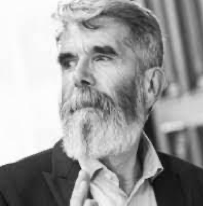
“I’ve had more than 40 cycles, each given during seven hours in the hospital, and then a small amount over 48 hours while I’m at home,” explained William, who retains a thick shock of silver hair and an impressive full beard.
“But I’ve been very lucky to have been able to continue working whilst having treatment all through lockdown. This has allowed me to remain involved as a trustee with charities, and with TVCA, throughout my treatment. And when I’ve felt well enough, and fitting in with bi-weekly treatment cycles, I’ve been able to walk regularly with a local U3A group.
Life with, and beyond, cancer
“I continue to try to live my life WITH cancer, rather than wait impatiently for when I could be ‘cancer-free’,” he says.
“Treatment weeks are made bearable by the excellent team at the hospital unit. Especially the cancer nurse specialists who make the difference between simply having treatment and being given great care.”
A routine scan in late 2020 showed the possibility of a new tumour in the centre of William’s chest. His clinical team advised continuing the chemo to shrink the tumour before any potential radiotherapy.
But a subsequent scan in February 2022 revealed that the tumour had gone! Following an MDT discussion, his oncologist suspended treatment for three months, when he’ll have another CT scan.
“So while I’m really looking forward to a treatment-free period, and hope I won’t need to restart, I know how important it is to balance optimism and realism,” explains William.
Wise words