As the school summer holidays begin, TVCA is warning about the risks of skin cancer caused by sunburn. For the summer months, get ready to be skin smart and UV savvy.
There are two main types of skin cancer and almost 173,000 cases [CRUK and CRUK] are diagnosed each year. Since the early 1990s, rates of both types of skin cancer have more than doubled [CRUK].
Reducing the number of skin cancers rather than having to treat them, even if diagnosed early, is better for everyone.
Check your awareness of the risks – and myths – of sun exposure and skin cancer in our quick quiz. Then read on or watch the videos to learn more about any wrong answers you get.
Be UV Savvy
Everyone can be vulnerable to skin cancer if they allow their skin to burn in the sun, or if they use tanning beds and lamps. Even on a cool cloudy day, the sun’s ultra-violet (UV) radiation can damage our skin without us realising. Cooler and cloudier conditions can mask a high UV index. This is why it is important not to rely on the temperature or sunshine to decide whether sun protection is needed.
The risk of all skin cancers increases with age – but melanoma is one of the most common cancers in people aged 15 to 44 [MelanomaFocus]. Other people with an increased risk include:
- people with a family history of melanoma
- people with a damaged immune system (e.g. organ transplant recipients, those living with HIV or taking immunosuppressive drugs)
Types of skin cancer
Skin cancers are usually one of these two types:
- non-melanoma: skin cancers which develop in the upper layer of your skin usually on the areas which are most exposed to the sun such as your face, ears, hands, shoulders, upper chest, and back
- melanoma: starts in the cells that give skin its colour. In white skin it is usually first visible as a new mole or an existing mole that has changed. On black skin it is more likely to develop on the palms, or soles, or under nails. The changes to the cells are caused by damaged DNA so they grow and multiply excessively. If left untreated they can spread through the lymph system and blood vessels and then spread to other parts of the body. Because melanoma has a risk of spreading, it is the more serious condition but 86% of cases of melanoma are preventable if you can protect your skin from the sun [NHS]
What to look out for
Being sun smart throughout your life can reduce the risk of you developing skin cancer.
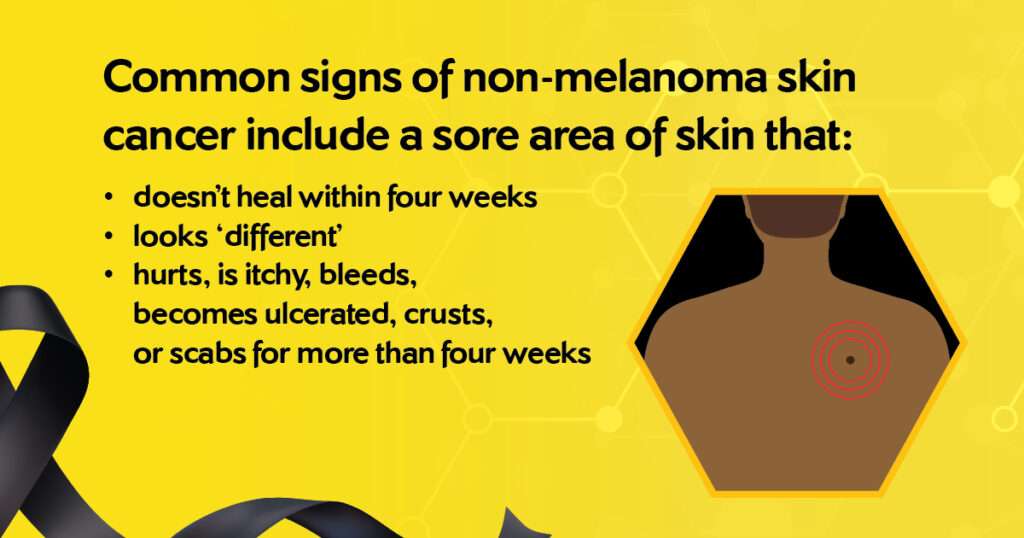
Common signs of non-melanoma skin cancer include a sore area of skin that:
- doesn’t heal within four weeks
- looks ‘different’
- hurts, is itchy, bleeds, becomes ulcerated, crusts, or scabs for more than four weeks
The most common signs of melanoma skin cancer are:
- the appearance of a new mole or lesion on your body
- change in an existing mole, such as a change in shape, bleeding, or itching
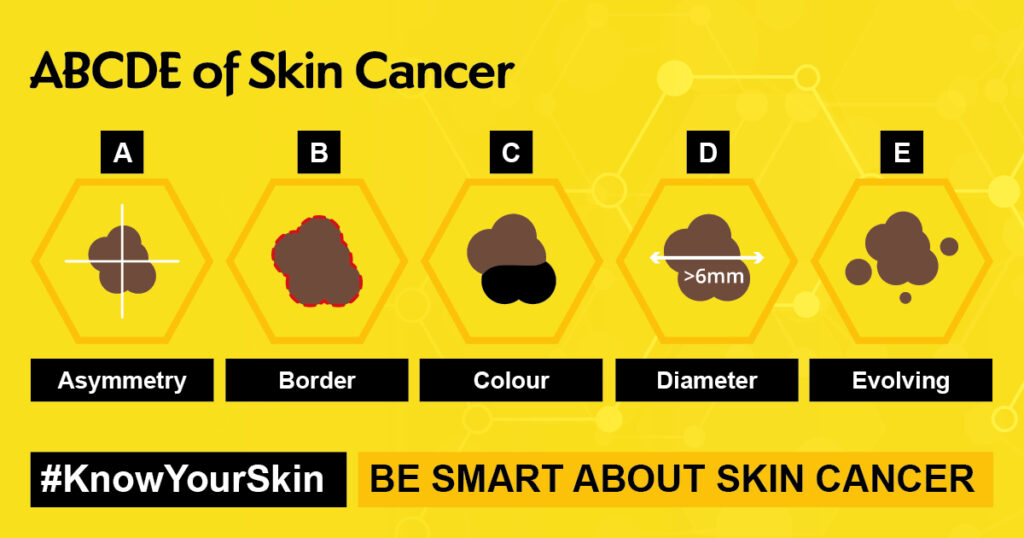
Use the ABCDE check to monitor your moles and freckles for signs of melanoma.
Expert advice
Dr Rubeta Matin, Consultant Dermatologist at Oxford University Hospitals NHS Foundation Trust, and TVCA Skin Lead said:
“This cancer affects more men than women, and men are almost twice as likely to die from the disease. However, people of all ages need to protect themselves from UV sun damage to avoid developing skin cancers throughout their lifetime.
“Fun in the sun shouldn’t involve sunburn and increasing the chance of skin cancer. We encourage people who work outdoors to stay safe and avoid skin damage with simple measures. These include using a sunscreen of at least SPF 30+ every two hours, avoiding the midday sun, and wearing a wide-brimmed hat and loose cool clothing that covers your skin.
“Never let your skin burn in the sun whatever your skin tone is as this can cause the changes in your skin cells which can potentially lead to skin cancers. Completely avoid sunbeds and tanning lamps! They expose your skin to high intensity UV radiation which dramatically increases the risk of skin cancer. No tan is worth this risk.”
Babies and children and sunburn
Dr Matin continues:
“When UV levels reach 3+, babies and children should not be exposed to the sun because of the risk of skin cell damage. Sunscreen should not be used on babies under six months. Instead babies should be shaded and protected from the sun with loose clothing and hats. Any blistering sunburn in childhood on any part of the body can increase the risk of skin cancer later in life.”
So be skin cancer smart and UV savvy. Be aware of your moles, freckles, and new unusual patches of skin – even those on your back. Check them regularly and if you notice anything new or unusual, contact your GP practice. Early diagnosis saves lives.
ends
Issued: 19/7/2023
NRL-033-01-SKIN-JUL23.jaa