

What is oesophageal cancer?
Your oesophagus (pronounced o-so-fo-gus) is the tube that connects your mouth and throat to your stomach. Sometimes it’s referred to as your food pipe. If cancer cells develop in this tube, it is called cancer of the oesophagus, or oesophageal (pronounced o-so-fo-jeel) cancer.
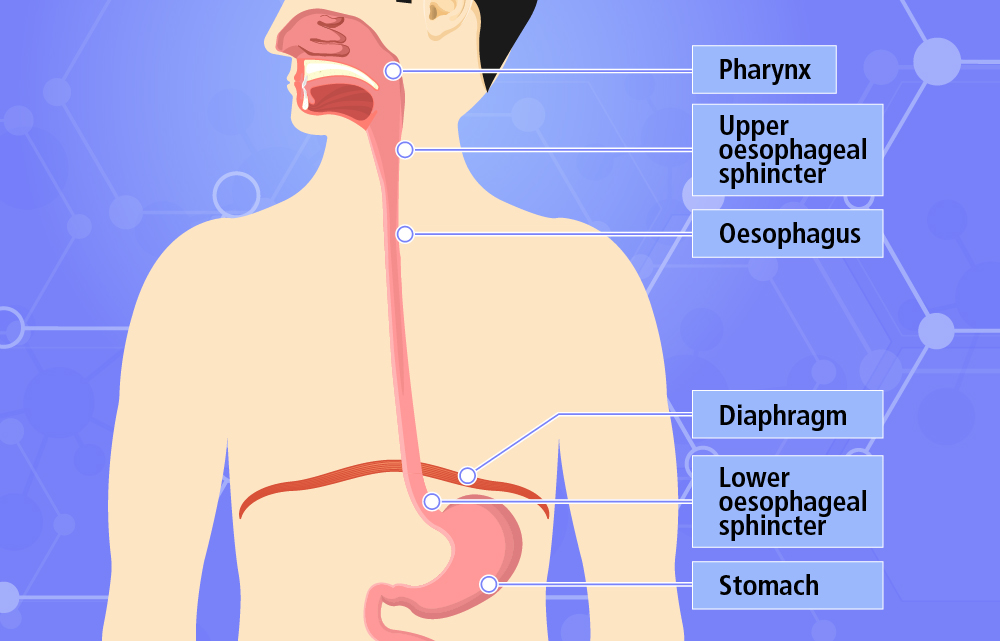
Oesophageal cancer is considered one of the ‘less survivable six’, as symptoms may be easily confused with other less serious conditions. Because of this, diagnosis is often made when the cancer has developed to a later stage.
Who can get oesophageal cancer?
Anyone can get oesophageal cancer, but age increases the risk. People aged 55+ should be alert to symptoms, but this cancer is more common in older people. In fact, four out of 10 cancer of the oesophagus develops in people aged 75+ [CRUK].
It is also diagnosed in more men than women. While 8,000 people die of oesophageal cancer in the UK each year [HeartburnCancerUK] more than twice as many men as women are diagnosed with this cancer – around 6,400 cases compared to 2,800 in women [CRUK].
Finally, there is a higher incidence of oesophageal cancer in people with a low income, or who lack employment, skills and training, who may have other health or disability issues, or who have poor housing, or a combination of these factors. CRUK states that around 1,200 cases of cancer of the oesophagus each year in England are linked to these conditions, affecting around 890 men and 320 women [CRUK].
What are the signs and symptoms of oesophageal cancer?

Key symptoms of oesophageal cancer might be hard to spot, but may include:
- having problems swallowing – something stuck in throat when eating. This symptom should not be ignored
- bringing up food after swallowing
- new symptoms of heartburn or indigestion lasting more than three weeks, especially in people aged 55+
You should particularly seek advice from your GP if you have these symptoms and they get worse over weeks or months.
Diagnosis is quick and easy with a simple camera test that your GP will arrange at your local hospital.
Screening and early diagnosis saves lives.
How do you reduce your risk of oesophageal cancer?
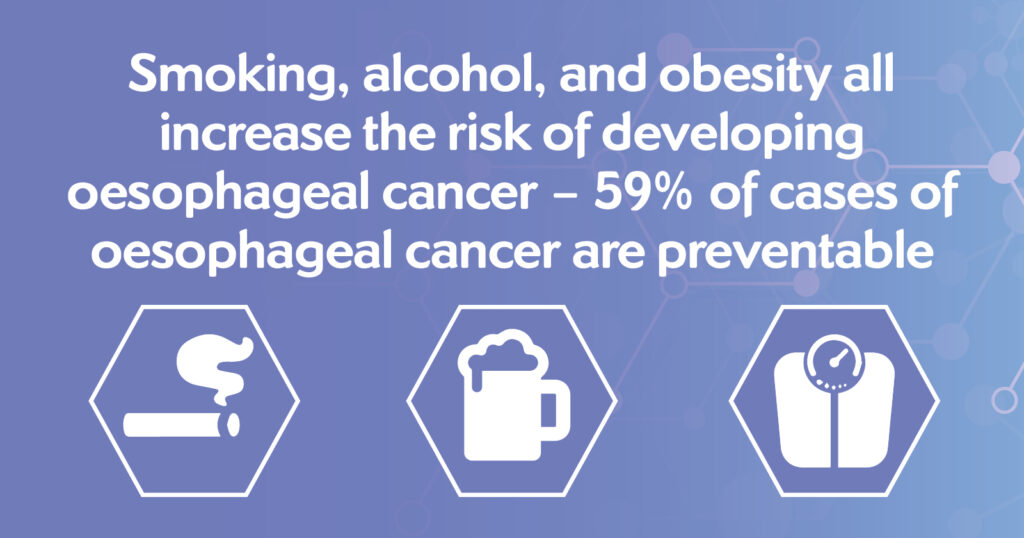
Although you cannot change your age, which is the greatest risk of oesophageal cancer, making simple lifestyle changes can reduce your chance of developing this cancer:
- quit smoking or chewing tobacco, or chewing betel nut. In the UK around 35 out of 100 (35%) oesophageal cancer cases are caused by smoking [CRUK]
- avoid drinking large quantities of alcohol – drinking alcohol increases your risk of squamous cell oesophageal cancer. And drinking and smoking together can make mouth cancer more likely than doing either by itself
- being overweight or obese increases your risk of getting oesophageal cancer. More than 25% of cases in the UK are caused by being overweight or obese [CRUK] (usually an adult BMI of 30+). However, sudden, rapid, unexpected weight loss should also be checked out urgently.
Barrett’s Oesophagus
Barrett’s Oesophagus is a medical condition where some of the cells in your oesophagus grow abnormally. If you have Barrett’s Oesophagus you are slightly more likely to get oesophageal cancer. But this is not common. It is sometimes called a pre-cancerous condition. The risk of Barrett’s is determined by the area of the oesophagus that is affected, which will be confirmed following a gastroscopy procedure.