

Breast cancer is the most common cancer in the UK. Around 59,000 people are diagnosed every year, which is more than 160 people every day.
Around 1 in 7 women will develop breast cancer during their lifetime.
The good news is that finding breast cancer early can make treatment simpler and more effective. That’s why it’s important to know what is normal for you, be aware of the signs and symptoms, and attend breast screening when invited.
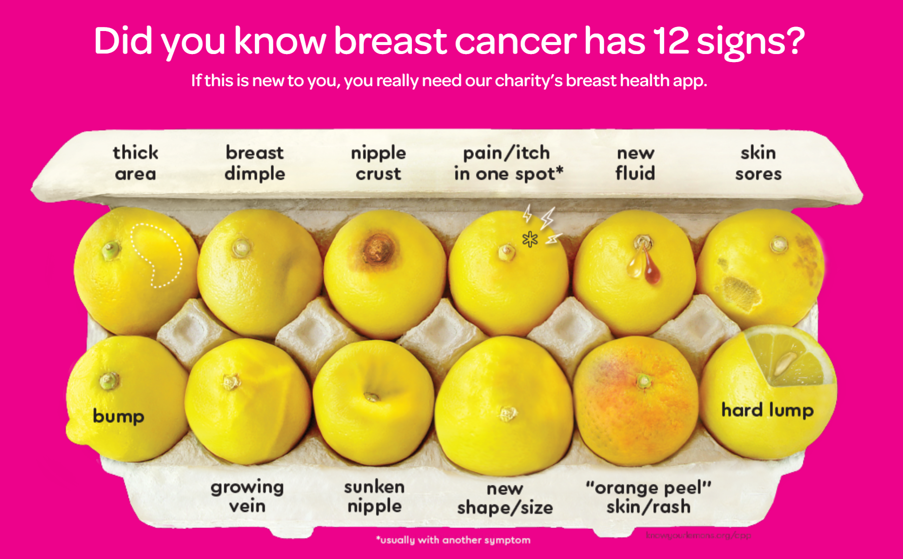
More at Know Your Lemons®
What symptoms should I look out for?
Most breast changes are not cancer. However, it’s important to get any new or unusual changes checked by your GP. Finding breast cancer early gives the best chance of successful treatment.
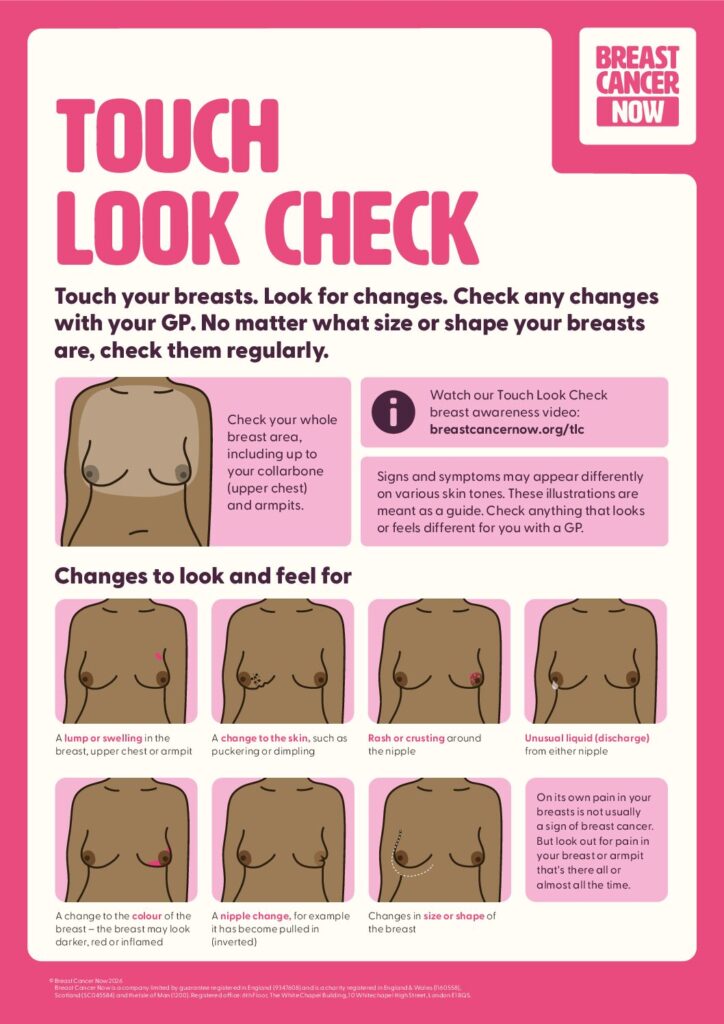
Signs and symptoms of breast cancer include:
- A lump or swelling in the breast, upper chest or armpit
- A change to the skin, such as puckering or dimpling
- A change in the colour of the breast – the breast may look darker, red or inflamed
- A nipple change, for example it has become pulled in (inverted)
- Rash or crusting around the nipple
- Unusual liquid (discharge) from either nipple
- Changes in size or shape of the breast
On its own, pain in your breasts is not usually a sign of breast cancer. But look out for pain in your breast or armpit that’s there all or almost all the time.
Breast cancer is much less common in men, but it can happen. The most common symptom in men is a lump in the chest area. Find out more breast cancer in men
Know your normal
There is no special technique for checking your breasts. The most important thing is to know what is normal for you and to notice any changes.
A simple way to remember this is Touch, Look, Check:
1. Touch – Can you feel anything new or unusual?
2. Look – Do your breasts look different from normal?
3. Check – If you notice any new or unusual changes, contact your GP.
Remember to check your whole breast area, including your upper chest and armpits. Regularly checking means you’re more likely to notice changes if they happen.
If you’d like help remembering to check, CoppaFeel! offers free text and email reminders. CoppaFeel reminder page
Click image to download. Visit: Breast Cancer
What happens when I see my GP
If you’re concerned about any breast changes, make an appointment with your GP.
Your appointment may be by phone or in person. If you are seen face-to-face, your GP may examine your breasts. After discussing your symptoms, they may:
- Reassure you that no further investigations are needed
- Ask to see you again after a short period of time
- Refer you to a specialist breast clinic for further assessment
Being referred to a breast clinic does not mean you have breast cancer. It simply means more tests are needed to understand the cause of your symptoms.
If you would feel more comfortable seeing a female healthcare professional, you can ask whether a female doctor, nurse or another member of staff is available
Breast cancer awareness information in Urdu and Punjabi
Healthwatch Oxfordshire and Sunrise Multicultural Project have developed breast cancer awareness leaflets in English, Urdu and Punjabi, informed by conversations with women from South Asian communities. The leaflets provide information about breast awareness, screening and when to seek medical advice, helping women share important information with family, friends and their communities. View and download the leaflets
Breast screening
Breast screening can detect cancers at an early stage, before they are large enough to see or feel. Early detection can improve treatment options and outcomes.
For more information about breast screening, visit our Breast Screening page.
Family history and genetic testing
Some people have a higher risk of developing breast cancer because of inherited genetic changes. If you have a family history of breast or ovarian cancer, you may wish to speak to your GP about whether further assessment is appropriate.
Find out more about breast cancer, family history and genetic testing